Waco Family Medicine is Pioneering School-Based Programs

Waco Family Medicine School Based Programs
It’s August, which means that roughly 47,000 students are gearing up to go back to school in McLennan County. This also means that parents are figuring out how to manage changes to the family calendar. For some, the rhythm and stability of the school day reintroduce ease. Patchwork efforts that include affordable summer camps and Vacation Bible Schools can only do so much. The dependability of the school schedule and after-school programs is a welcome relief. And in some cases, these cyclical rhythms make holding a decent-paying job possible. But that doesn’t mean the school year is without its own logistical challenges. There are still UIL competitions, field trips, choir competitions, early-release days, and perhaps college visits. There are any number of reasons why a parent might need to take time off work. Waco Family Medicine is trying to eliminate one of those. Doctor visits.
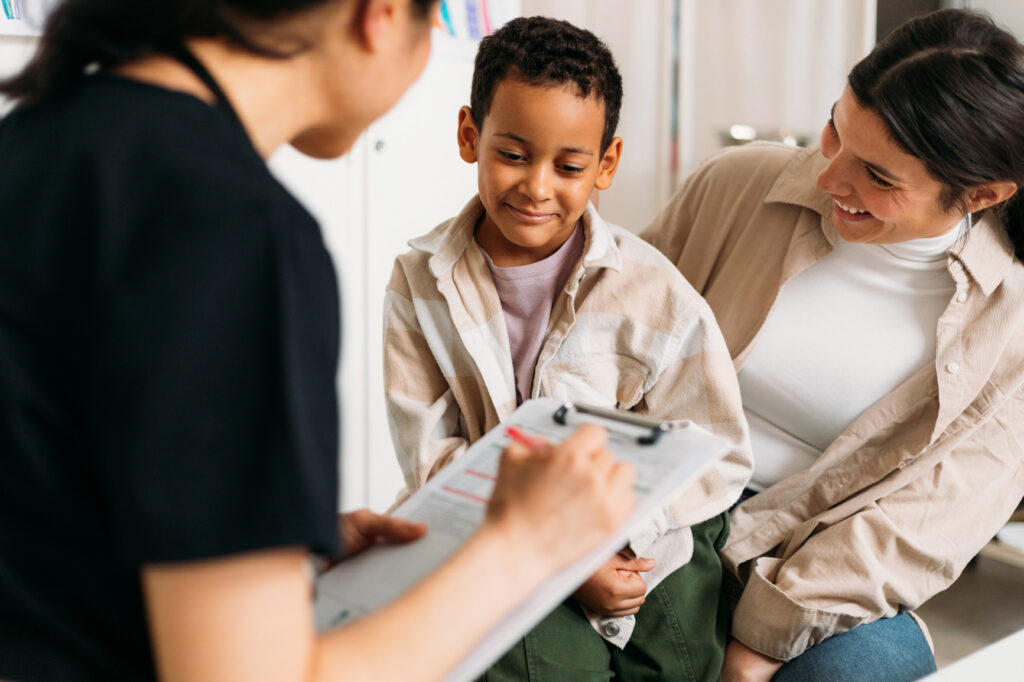
In the 1870s, rural Americans had to travel to town to buy many household necessities, often paying inflated prices to local merchants. Then Aaron Montgomery Ward came up with an idea that changed business models across the world. He decided to mail catalogs directly to farms and deliver products to them by rail. The notion that the product can come to the customer has been a standard model ever since. Waco Family Medicine’s school-based service program is trying to eliminate a similar barrier. The idea is to take healthcare into schools. And it’s working. One parent shared, “It really helps me a lot having the appointments [on campus] and not having [my child] miss school for the appointments.”
Waco Family Medicine’s school-based service program has evolved to include dental, behavioral health, and now vision. But it didn’t happen all at once. Dr. Kelsey Thompson has been taking dental services into schools in Waco and Marlin schools and Head Start programs for a few years. Here she sheds some insight into those efforts: “The school-based dental program provides oral health education and preventive care to students who may not otherwise receive regular dental care. It reduces missed class time for students and helps working parents avoid needing to take time off to bring their children to dental appointments. Additionally, by identifying dental problems early, we can often prevent them from progressing into pain, infection, or more extensive treatment needs. Most importantly, our students have a positive, fun dental experience in a familiar environment while learning healthy habits during a crucial stage of life. Helping children have a positive dental experience, some of whom are seeing a dentist for the very first time, is one of the most rewarding parts of the school-based dental program.”
Dr. Thompson’s experience has been valuable in helping Waco Family Medicine continue to pioneer school-based programs. Her experience has taught us that there are additional hurdles to treating children: getting parents’ permission to treat children, having children show up when they are supposed to, and operational challenges to getting and maintaining a mobile dental unit on site.
While it was clear Waco Family Medicine had a good idea, it became evident that they needed someone to manage the project. In the fall of 2025, Waco Family Medicine hired Ruth Lara (MPH), to coordinate the dental program. But soon new needs evolved. Transformation Waco was serving Waco ISD students through a vision program, but that grant contract expired. Waco Family Medicine responded. In January, we hired our first-ever optometrist, who is operating out of our South 18th Clinic. Transformation Waco will continue to provide students with transportation to the vision clinic, and the Essilor Foundation is providing prescription glasses.
Around the same time, a group of Waco leaders were strategizing about ways to better address the mental health needs of Waco ISD students. This winter, through the generosity of grants given by the Rapoport Foundation, Waco Foundation, and Heart of Texas Behavioral Health Network, and Waco Family Medicine launched a behavioral health program in three WISD middle schools: G.W. Carver in January, and Tennyson and Cesar Chavez in February. Through those efforts, 88 students were seen, with 523 total follow-up visits. The impact is already being felt: “My grandson really liked the counseling. He would always come home and tell me that it made him feel good when he saw the counselor,” one grandmother commented.
In the fall, these behavioral health and dental services will be extended to J.H. Hines, Crestview, Cedar Ridge, and Parkdale Elementary Schools. Here’s Dr. Thompson on the expansion: “We are very excited about the continual growth of the dental school-based program as we are expanding into additional Waco ISD campuses this year and making the registration process easier for patients. While the school-based dental program has historically focused on providing preventive care to students, this year we are also going to start providing restorative treatment in the schools for children who are identified to have cavities. By offering restorative care on site, we will be able to close the circle of care for our school-based patients who face several barriers to receiving much-needed restorative dental care.”
Not long after she was hired, Lara was asked to move into a director role to oversee the growing school presence program, a change she was excited to welcome: “As someone with a background in public health, what excites me the most is the opportunity to remove barriers that often prevent students and families from accessing healthcare. By bringing services closer to where students learn every day, we’re making care more accessible and helping ensure they receive the support they need to be healthy, successful, and ready to learn!”
At its heart, school-based healthcare is about more than convenience. It’s about recognizing that access isn’t simply having a clinic nearby—it’s making care available when and where families can actually receive it. Every dental cleaning completed during the school day, every counseling session that helps a child cope, and every pair of glasses that helps a student see the board represent one less obstacle standing in the way of a child’s success. Healthy students are better learners, working parents face fewer disruptions, and the entire community benefits when barriers to care begin to disappear.